


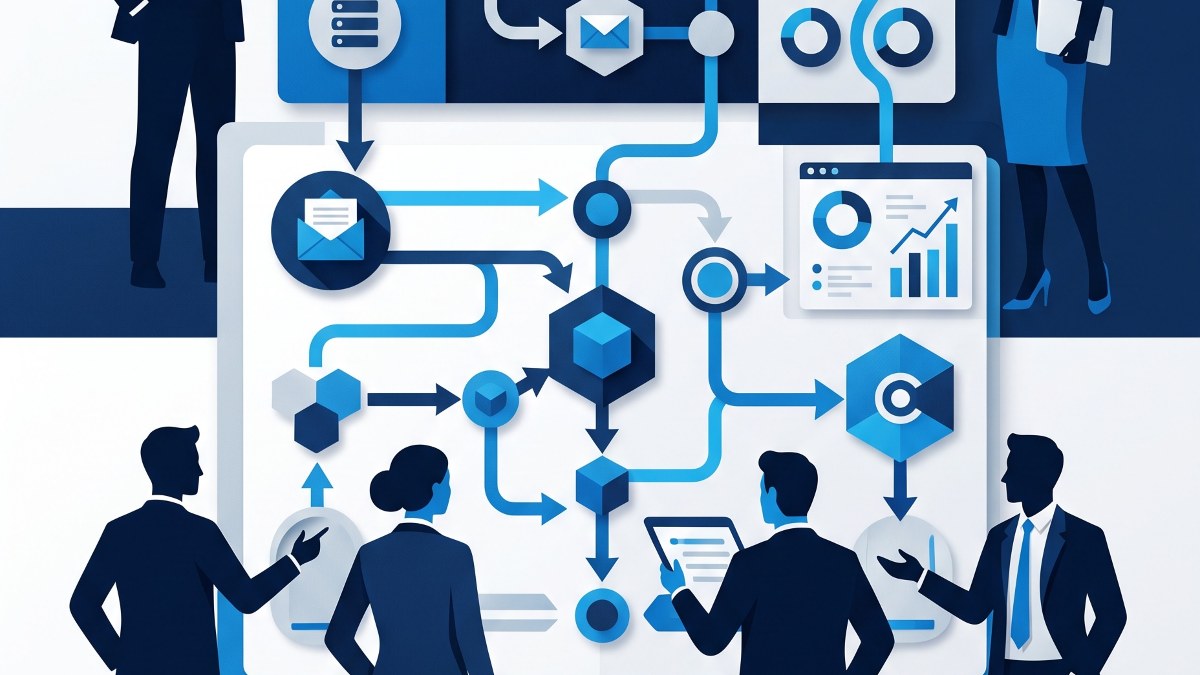
Marketing automation is not about sending more messages. It’s about selling better.
In many companies, marketing still operates manually: scattered lists, forgotten follow-ups, unprioritized opportunities, and reports that arrive too late to guide decisions. In this scenario, marketing automation becomes a way to organize the process, reduce noise, and bring more predictability to the relationship with leads and customers.
When applied well, automation does not replace strategy. It consistently executes what the strategy has defined. That means sending the right message, at the right time, to the right person, based on behavior, interest, and buying stage. The result is a smarter funnel and an operation that depends less on repetitive tasks.
Why automation makes a difference in B2B
In B2B environments, journeys are usually longer and involve more than one person in the decision. That requires cadence, context, and follow-up. Without automation, teams tend to miss the timing: the lead shows interest but gets a response too late; downloads a piece of content but is not nurtured; visits an important page but no one follows up on the opportunity.
With automated processes, the company can respond faster and more consistently. Marketing gains scale without losing personalization, and the sales team receives better-prepared leads. This is especially useful when there are many entry points, such as forms, landing pages, campaigns, events, and paid media channels.
Where automation creates the most value
The biggest gain is the ability to connect actions and data. Instead of treating each interaction as an isolated event, the company starts to see lead behavior as a logical sequence. That makes it easier to nurture, qualify, and prioritize opportunities.
Some practical uses include:
- welcome flows for new leads;
- nurturing by interest or segment;
- alerts for the sales team when there are signs of intent;
- re-engagement of inactive contacts;
- automatic segmentation based on behavior;
- routing opportunities to the right team.
For companies that want to structure this type of operation, it is worth exploring the page on SMS and email marketing campaigns and marketing automation, which shows how to unify channels and create more consistent journeys.
Automation without process is just sending
A common mistake is adopting tools before defining the funnel logic. When that happens, the company automates messages, but not decisions. The result is usually too much communication, low relevance, and little commercial impact.
Before implementing flows, it is important to map questions such as:
- which actions indicate real interest?
- which content helps each stage of the journey?
- when should the lead be handed over to sales?
- which segments require different messages?
- which metrics show real progress?
This discipline avoids waste and improves the quality of the experience. Instead of pressuring the lead, the company begins to guide the journey more intelligently.
From rework to predictability
When marketing and sales work with well-designed automation, the benefit is not only operational. There is a direct impact on predictability. The team becomes less dependent on memory, loose spreadsheets, and manual tasks to track opportunities. This improves response time and reduces communication failures.
If the company already invests in demand generation, the next step is to turn volume into process. That includes integration across channels, clear qualification criteria, and follow-up routines. In many cases, automation also connects with content, media, and CRM initiatives, creating a more mature operation.
For companies that want to expand their digital structure as a whole, automation works best when it is part of a well-built foundation. That is why it pairs so well with search marketing management, SEO, and content marketing, because content and automation become stronger when they work together.
Conclusion
Marketing automation is not a magic solution. It is a way to organize growth with more clarity, consistency, and commercial intelligence. For B2B companies, it helps reduce rework, improve the lead experience, and turn attention into real opportunity.
When a company defines processes, integrates channels, and tracks relevant metrics, automation stops being an isolated tool and becomes part of the revenue strategy.