


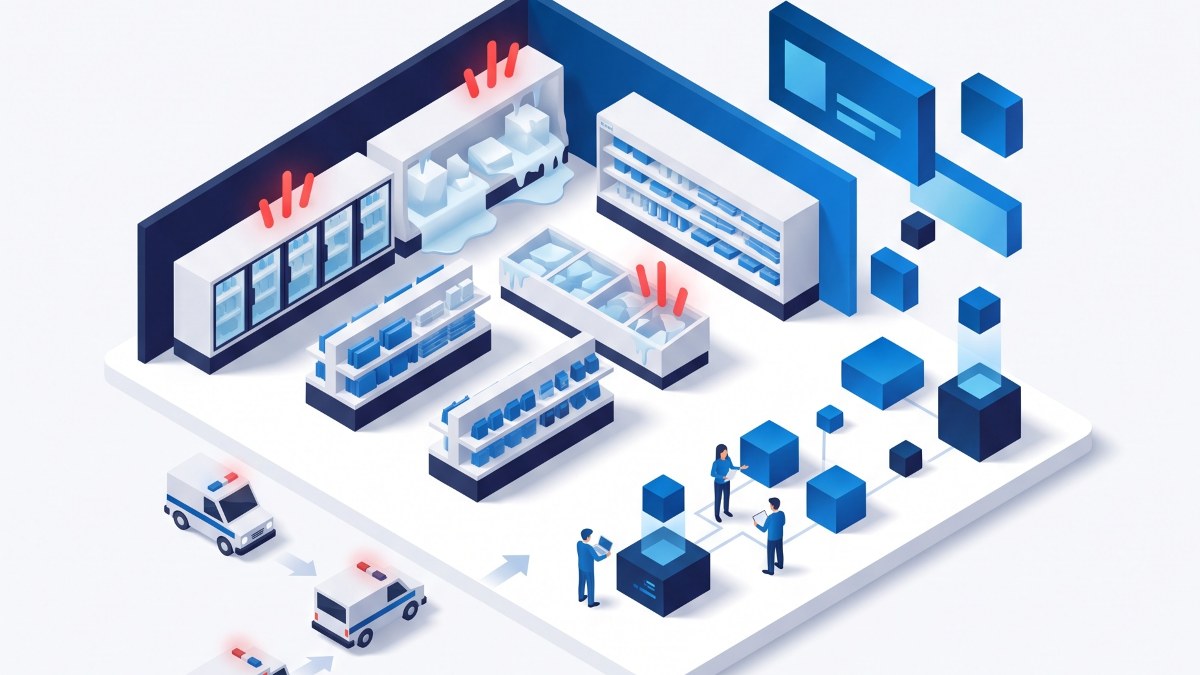
Supermarkets in several European countries experienced problems with their refrigeration systems after a new suspected cyberattack. In some cases, temperatures in refrigerators and freezers reached 50C, which affected products and store operations.
Quick answer
- The case involves a suspected cyberattack against supermarket refrigeration systems.
- The countries cited with problems were Belgium, Estonia, Ireland, Finland, Luxembourg, the Netherlands, and Sweden.
- In some stores, temperatures rose to 50C.
- The impact affected specific chains and locations, with reports of hacked equipment and temporary operational disruptions.
- The case highlights the risk of connected, remotely controlled systems in critical environments.
What happened
The incident affected supermarkets in at least seven European countries. The impacted chains reported failures in refrigeration systems, and some stores said the equipment was compromised overnight.
In Sweden, Coop said six stores were affected. ICA said it was aware that a limited number of stores had been impacted by an incident overnight. At an ICA store in Sjöbo, the refrigerators and freezers were hacked and had their temperature set to 50C. In Stockholm, one store reported that its freezers broke down due to a cyberattack at 2 a.m.
Why this is so concerning
The problem is not just technical. When a refrigeration system fails in supermarkets, there is a direct risk to perishable food, business continuity, and consumer trust. In a scenario like this, the store may lose inventory, interrupt sales, and suffer reputational damage.
The case also stands out because these systems can be monitored and controlled remotely. That expands the attack surface and makes protecting connected devices a priority for companies that operate critical infrastructure.
What is already known about the impact
The reports show that the effect was immediate and practical: equipment outside normal control, higher temperatures, and compromised products. In some locations, stores had to deal with empty refrigerators or part of their operations being affected.
In Belgium, the impact was also felt across different chains. Ahold Delhaize said refrigerators and freezers in dozens of supermarkets in Belgium and Luxembourg were affected. The company said distribution centers continued operating normally and that deliveries were not interrupted.
Other chains, such as Colruyt, Intermarché, and Carrefour Belgium, also reported technical problems that affected stores to varying degrees.
What this kind of incident shows for companies
For companies that depend on connected technology, this case reinforces three points: continuous monitoring, updating exposed devices, and responding quickly to incidents. When an operational system depends on remote equipment, security must cover both the network and the endpoints.
It also makes clear that failures in industrial or operational technology do not affect IT alone. They impact logistics, inventory, customer service, and perceived reliability. In both digital and physical businesses, infrastructure resilience is part of the customer experience.
Frequently asked questions
What does it mean when a supermarket says it was hacked?
It means that systems tied to store operations were accessed or manipulated improperly, affecting equipment such as refrigerators and freezers.
Which countries were mentioned in the incident?
Belgium, Estonia, Ireland, Finland, Luxembourg, the Netherlands, and Sweden.
Why is a temperature of 50C so serious?
Because that level of heat makes refrigeration ineffective and compromises food that depends on temperature control to remain safe for sale.
At SuaEmpresa.Net, this kind of case reinforces the importance of well-planned digital infrastructure, secure integration, and monitoring of critical systems, especially when operations depend on connected technology. In website and web system development projects, security and stability need to go hand in hand with operations. To understand how similar cases have already required more robust digital ecosystems, also see the Estoril website and management system case study and the article about cloud servers for small businesses.
Source: The Guardian