


For many companies, the question is not whether it is worth communicating by email, but which structure makes the most sense for the current stage of the business. In some scenarios, a simple marketing email strategy already does the job well. In others, the operation needs automated flows, segmentation, and more precise tracking to sustain growth.
The problem is that these two resources are often treated as if they were the same thing. They are not. And this confusion leads to poorly directed investments, inefficient campaigns, and contacts receiving messages outside the context of their journey.
If your company sells to other businesses, the goal is not just to send messages. It is to nurture relationships, qualify opportunities, and reduce the time between first interest and the purchase decision. That is where understanding the difference between the two models becomes decisive.
What each one does in practice
Email marketing is the foundation of recurring communication. It is used to send campaigns, content, updates, invitations, and messages to a segmented list. It works well when a company wants to maintain presence and relationships with clarity and consistency.
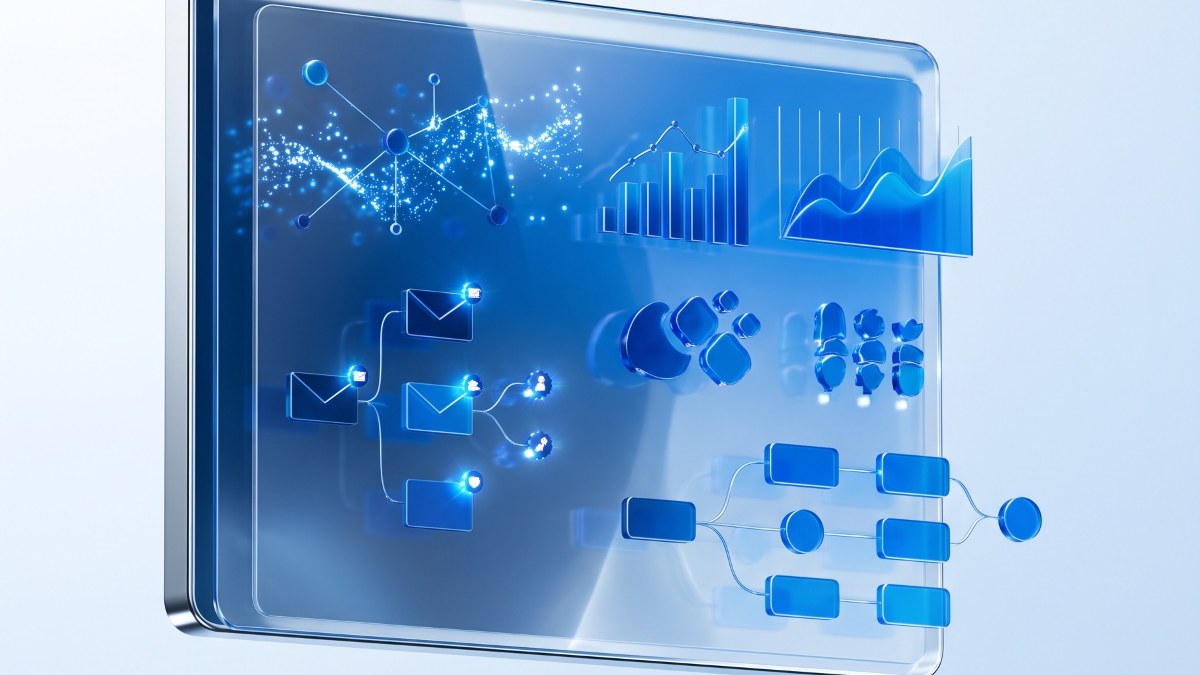
Marketing automation goes beyond manual sending. It allows you to create automated flows based on behavior, interest, and lead stage. This includes welcome messages, lead nurturing, follow-up after form conversion, and specific sequences for different contact profiles.
In practice, email marketing answers the question: “What are we sending now?” Automation answers a more strategic question: “What should happen after the lead interacts with the company?”
When email marketing is enough
Not every operation needs to start with a complex structure. In companies with lean teams, a simpler sales cycle, or a still-small database, email marketing can be the smartest starting point.
- when the company wants to keep regular contact with leads and customers;
- when sends are occasional and based on specific campaigns;
- when there is not yet enough volume to justify sophisticated flows;
- when the initial focus is building communication consistency.
In this scenario, the most important thing is to have good segmentation, relevant content, and a frequency that does not wear out the list. Many companies fail not because of a lack of technology, but because they lack clarity about the message and the audience.
When automation starts to make a difference
As the sales funnel becomes more structured, automation stops being a differentiator and becomes an operational advantage. This happens when the company needs to respond quickly, nurture contacts at different stages, and prevent opportunities from going cold.
A good example is when a lead downloads a piece of content, visits strategic pages, and then goes quiet. Without automation, this behavior can go unnoticed. With automation, the journey continues with the right messages, at the right time, and with a better chance of conversion.
If your operation already depends on multiple channels, CRM integration, and lead tracking by stage, it is worth considering a more robust structure. At this point, solutions such as SMS campaigns, email marketing, and marketing automation help organize the journey end to end.
The most common mistake: automating before organizing
Many companies want to start with automation, but they still do not have the minimum data organized. Without segmentation, without defined personas, and without a clear funnel, technology only speeds up the disorganization.
Before automating, it is worth answering three questions:
- who should receive each message;
- at what stage of the journey that contact is;
- what action we expect after sending.
When these answers exist, automation becomes more precise. When they do not, the best path is usually to start with well-executed email marketing and evolve gradually.
How to decide on the best starting point
If the priority is presence, relationship, and consistency, email marketing can work very well. If the priority is scale, qualification, and automated journey tracking, automation tends to deliver more value.
The ideal approach is not to choose one over the other as if they were competitors. In many cases, email marketing is the foundation and automation is the next layer of evolution. One supports the other.
For B2B companies, this difference matters because the decision cycle is usually longer, with more touchpoints and a greater need for context. The better the communication between marketing and sales, the greater the chance of turning interest into a real opportunity.
If your company is still defining this path, the first step is to map the sales journey and understand where manual communication can no longer keep up with demand. From there, it becomes much easier to decide whether to start simple or build an automated operation from the beginning.
When the strategy is well designed, technology stops being just a sending tool and becomes a driver of relationships and conversions.
Conclusion
In B2B, the right choice depends on the stage of the operation. Email marketing handles recurring communication well. Marketing automation expands scale, personalization, and efficiency. The best path is the one that matches the maturity of the sales process without creating unnecessary complexity.